
Biofermented vs. Synthetic NAD+: Which One Is Right for You?
Introduction:
NAD+ therapy has become one of the most talked-about advancements in the world of cellular health, anti-aging, and energy optimization. If you have been researching NAD therapy, NAD injections, or ways to slow the aging process at the cellular level, you have likely come across two distinct forms: biofermented NAD+ and synthetic NAD+. But what is the actual difference between biofermented vs synthetic NAD+, and which one is right for you?
This in-depth guide breaks down everything you need to know, from how each form is produced to how they perform in the body, so you can make an informed decision about your health. Whether you are exploring NAD+ for energy, brain fog, anti-aging, or overall cellular wellness, understanding the difference between biofermented and synthetic NAD+ is the first step.
What Are NAD+ Supplements and Therapies?
NAD+ stands for nicotinamide adenine dinucleotide. It is a coenzyme found in every living cell in the human body and is essential for hundreds of biological processes, including:
- Converting food into cellular energy (ATP production)
- Supporting mitochondrial function
- Activating sirtuins, the proteins that regulate cellular aging and DNA repair
- Supporting the PARP enzymes responsible for DNA repair
- Regulating the circadian rhythm and sleep-wake cycles
- Reducing oxidative stress and inflammation
NAD+ levels naturally decline with age, and this decline is associated with reduced energy, slower recovery, increased inflammation, cognitive decline, and accelerated aging. Research published in leading journals has linked declining NAD+ levels to conditions such as metabolic dysfunction, neurodegeneration, and cardiovascular disease.
NAD therapy, whether delivered through injections or IV infusions under medical supervision, is designed to restore these declining levels and help the body function more efficiently at the cellular level.
What Is Synthetic NAD+?
Synthetic NAD+ is produced through chemical synthesis, a process that builds the NAD+ molecule through a series of controlled chemical reactions in a laboratory setting. This is the most common manufacturing approach used in the pharmaceutical and supplement industries due to its scalability and lower production cost.
Advantages of synthetic NAD+:
- Can be produced in very large quantities
- Lower manufacturing cost
- Consistent and predictable output
- Well-understood regulatory pathway
- Widely available in injectable forms
Limitations of Synthetic NAD+
Understanding the limitations of synthetic NAD+ is just as important as understanding its advantages. Being honest about this is part of helping patients make the best possible decision for their health.
Impurity profile: Because synthetic NAD+ is produced through chemical reactions rather than biological pathways, trace amounts of chemical byproducts and residual compounds can remain in the final product even after high-grade purification. These are not present in large quantities, but in sensitive individuals they can influence tolerability and the overall experience of treatment.
Tolerability concerns: Some patients who receive synthetic NAD+ via injection or IV infusion report side effects such as flushing, nausea, chest tightness, and headaches. While these are generally mild and transient, they are more commonly associated with synthetic forms than with biofermented NAD+. For patients who are particularly sensitive to supplements or medications, this can be a meaningful limitation.
Lack of biological processing: Synthetic NAD+ is assembled through chemical reactions and does not undergo the same enzymatic folding and biological processing that occurs when NAD+ is produced inside a living cell. Some researchers believe this distinction can influence how the molecule interacts with cellular receptors and transporters, though more research is needed to fully characterize this effect.
Diminishing tolerance in some patients: Some patients who use synthetic NAD+ over an extended period report that their initial response diminishes over time. While this is not universal, it is a pattern some clinicians have observed that is less commonly reported with biofermented forms.
What Is Biofermented NAD+?
Biofermented NAD+ is produced using living microorganisms, such as yeast or bacteria, in a controlled fermentation environment. This process closely mirrors how NAD+ is naturally synthesized inside living cells, using biological enzymatic pathways rather than chemical reactions.
Because the production occurs within a living biological system, biofermented NAD+ closely resembles naturally occurring NAD+ in its structure and molecular conformation. The fermentation process uses natural precursors such as nicotinamide and ATP intermediates, yielding a product with high stereochemical fidelity and a significantly cleaner impurity profile compared to its synthetic counterpart.
Advantages of biofermented NAD+:
- Produced through a biological process that mirrors natural NAD+ synthesis
- Higher biological compatibility and familiarity to the body
- Cleaner purity profile with fewer chemical residues
- Generally better tolerated by sensitive individuals
- Associated with reduced side effects such as flushing or nausea during administration
- Aligns with clean-label and naturally derived product standards
- Environmentally more sustainable than chemical synthesis
Limitations of Biofermented NAD+
Balanced information matters. Biofermented NAD+ has real advantages, but it also has genuine limitations that patients should understand before making a decision.
- Higher cost: Biofermented NAD+ is significantly more expensive than synthetic forms. This is a direct reflection of the more complex production process, the limited number of facilities capable of pharmaceutical-grade biofermentation, and the more intensive purification steps required. For some patients, this cost difference is a meaningful barrier.
- Limited availability: Because fewer manufacturers produce pharmaceutical-grade biofermented NAD+, it is not as widely available as synthetic options. Not every clinic, pharmacy, or supplement brand offers it, which means patients may need to seek out a provider who specifically sources biofermented forms.
- Not universally necessary: It is important to be honest about this. Not every patient will notice a dramatically different response between synthetic and biofermented NAD+. Patients who are not particularly sensitive to synthetic compounds and who have no prior history of tolerability issues may achieve comparable results with either form. The cleaner purity profile of biofermented NAD+ is most meaningfully relevant for sensitive patients, those who have had negative reactions to synthetic forms, and those seeking clinical optimization at the highest level.
- Precise production requirements: The fermentation process requires precise control over environmental conditions to ensure consistent quality and yield. This adds complexity and cost to the production process and makes quality control more demanding than with straightforward chemical synthesis.
Why Is Biofermented NAD+ More Expensive?
This is one of the most common questions patients ask before committing to biofermented NAD+ therapy, and it deserves a thorough and transparent answer.
1. The production process is fundamentally more complex. Chemical synthesis can be performed in standard pharmaceutical manufacturing facilities using well-established industrial processes. Biofermentation requires specialized bioreactors, carefully controlled living microbial cultures, precise environmental monitoring, and far more complex process management. This complexity costs more to set up, maintain, and operate.
2. Fewer facilities are capable of producing pharmaceutical-grade biofermented NAD+. The global supply of pharmaceutical-grade biofermented NAD+ is limited because relatively few manufacturers have the infrastructure, expertise, and regulatory compliance required to produce it at clinical quality standards. Limited supply combined with growing demand naturally drives a higher price.
3. Purification is more intensive. When NAD+ is produced inside living organisms, the final product must be carefully separated and purified from the biological matrix it was produced in. This purification process is more complex and resource-intensive than the purification of chemically synthesized compounds, adding to the overall production cost.
4. Quality control demands are higher. Because the production involves living biological systems, ensuring batch-to-batch consistency requires more rigorous testing and quality control compared to chemical synthesis. These additional quality assurance steps add cost that is reflected in the final price.5. You are paying for a meaningfully better product. The higher cost of biofermented NAD+ is not just a marketing premium. It reflects a genuinely more sophisticated production process that results in a product with better biological compatibility, a cleaner purity profile, and improved tolerability for most patients. For patients investing in their cellular health and anti-aging outcomes, the additional cost is justified by the clinical results.
At MD Total Wellness, we source biofermented NAD+ because we believe our patients deserve the highest quality available, not the cheapest option on the market.
Common Misconceptions and Myths About NAD+ Therapy
As NAD therapy has grown in popularity, so has the amount of misinformation circulating online. Here we address the most common myths and misconceptions so you can make decisions based on accurate information.
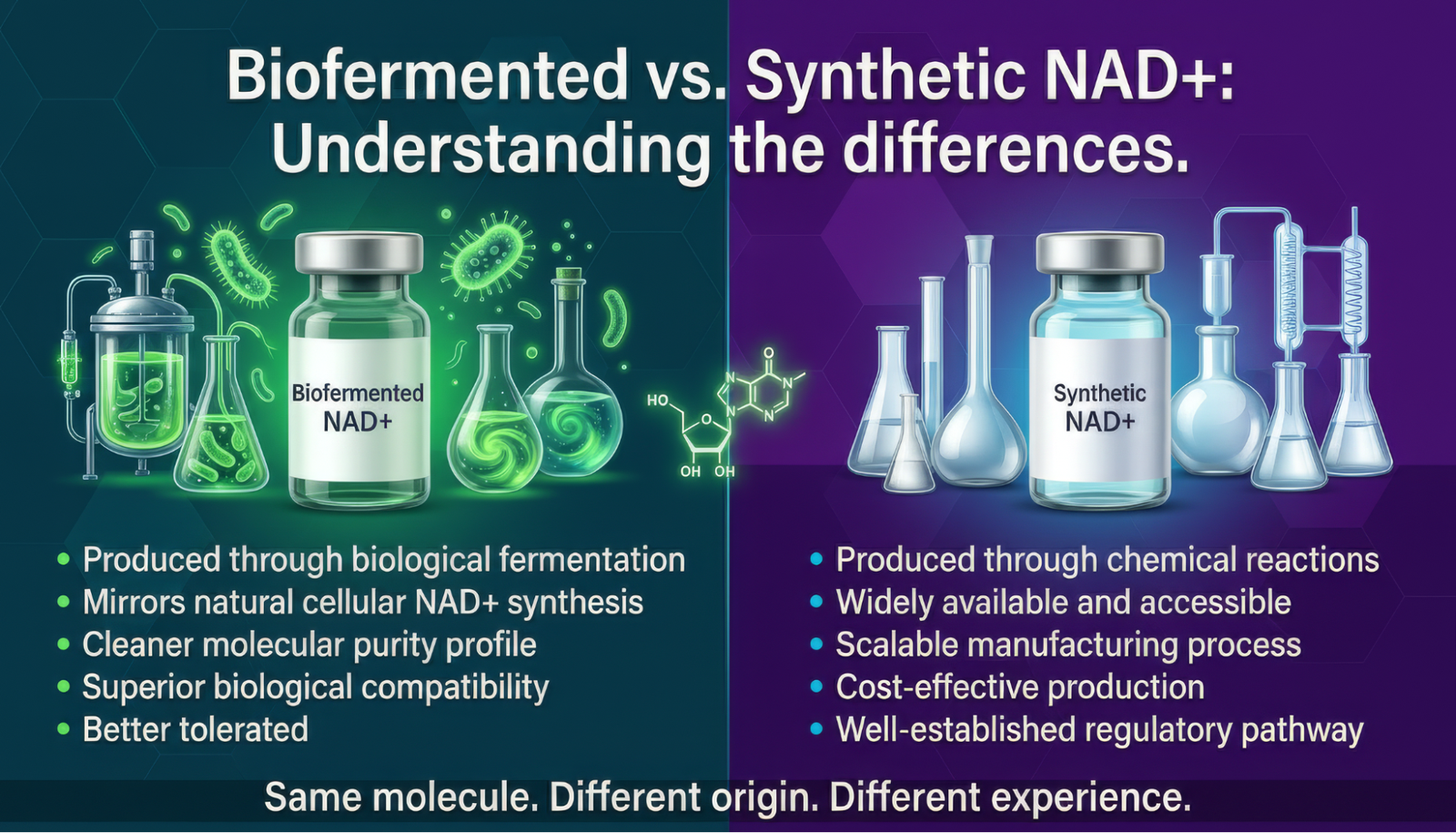
- Myth: Biofermented and synthetic NAD+ are completely different molecules. Fact: They are the same molecule. Biofermented and synthetic NAD+ share identical molecular structures. The difference is entirely in how they are produced. Biofermented NAD+ is made through a biological process using living organisms, while synthetic NAD+ is made through chemical reactions. Same molecule, different origin, different purity profile.
- Myth: Over-the-counter NAD+ supplements are just as effective as professional-use injectable NAD+. Fact: This is not accurate for most patients. Over-the-counter NAD+ precursors like NMN and NR must be converted by the body before they can raise NAD+ levels, and a significant portion is degraded during digestion and first-pass metabolism. Professional-use injectable biofermented NAD+ delivers the compound directly into circulation, bypassing digestive breakdown entirely, and produces faster and more pronounced results. This is why MD Total Wellness exclusively offers professional-use only injectable NAD+, fully vetted for purity and quality.
- Myth: NAD+ therapy is only for older people. Fact: While NAD+ levels do decline with age, anyone experiencing chronic fatigue, brain fog, poor recovery, high stress loads, or suboptimal energy levels can benefit from NAD therapy, regardless of age. Athletes, high-performance professionals, and younger patients dealing with burnout regularly seek and benefit from NAD+ therapy.
- Myth: More NAD+ is always better. Fact: Optimal dosing matters. Like most biological compounds, there is a therapeutic range for NAD+. More is not always better, and working with an experienced medical provider ensures you receive the right dose for your specific needs and health goals. Excessive dosing can lead to unnecessary side effects without additional benefit.
- Myth: NAD+ therapy is just a wellness trend with no real science behind it. Fact: NAD+ is one of the most extensively studied coenzymes in human biology. Research published in Nature, the NIH database, and leading peer-reviewed journals consistently supports its role in mitochondrial function, DNA repair, sirtuin activation, and cellular aging. The science behind NAD+ is not new. Its application as a therapeutic intervention is what is gaining traction, and the clinical evidence is growing rapidly.
- Myth: Biofermented NAD+ is not worth the extra cost. Fact: For patients who have experienced side effects with synthetic NAD+, who are sensitive to supplements and medications, or who are seeking clinical optimization, biofermented NAD+ offers a meaningfully superior experience. The higher cost reflects real differences in production quality. Whether it is worth it depends on the individual patient, their goals, and their prior experience with NAD therapy.
- Myth: NAD+ injections are dangerous. Fact: When administered under appropriate medical supervision with proper dosing, NAD+ injections have a strong safety profile. NAD+ is a naturally occurring molecule that the body produces and uses continuously. The key is working with an experienced provider who uses high-quality, pharmaceutical-grade NAD+ that is fully vetted for purity and quality, and who tailors the protocol to your individual needs.
Biofermented NAD+ vs. Synthetic NAD+: Key Differences
| Feature | Synthetic NAD+ | Biofermented NAD+ |
| Production Method | Chemical synthesis | Biological fermentation using microorganisms |
| Biological Similarity | Chemically identical molecule | Mirrors natural cellular NAD+ biosynthesis |
| Purity Profile | May contain chemical byproducts | Cleaner, fewer synthetic residues |
| Tolerability | Some patients report discomfort | Generally better tolerated |
| Cost | Lower | Higher |
| Availability | Widely available | Less common, fewer producing facilities |
| Environmental Impact | Higher chemical use | More sustainable process |
| Best For | Broad accessibility, cost-sensitive use | Sensitive patients, clinical optimization |
It is important to note that both forms share the same molecular structure. Biofermented NAD+ is not a different molecule. It is the same NAD+ produced through a different and more biologically compatible process. The difference lies not in what it is but in how it is made, and that difference can meaningfully impact tolerability, purity, and clinical outcomes for certain patients.
Which Is More Effective for Energy and Anti-Aging?
This is the central question for anyone exploring NAD therapy. The answer is nuanced, but the clinical and observational evidence increasingly points toward biofermented NAD+ as the superior choice for most patients in a clinical setting.
- Energy and mitochondrial function: Both synthetic and biofermented NAD+ can effectively raise intracellular NAD+ levels and support mitochondrial energy production. However, biofermented NAD+ is associated with improved bioavailability and cellular uptake, meaning more of what you receive actually reaches the mitochondria and gets put to work.
- Anti-aging and sirtuin activation: NAD+ activates sirtuins, a family of proteins that regulate cellular aging, DNA repair, and inflammation. Both forms support sirtuin activity, but the cleaner purity profile of biofermented NAD+ means fewer competing compounds that could interfere with enzymatic activity.
- Clinical observations: Patients receiving biofermented NAD+ injections at clinics like MD Total Wellness frequently report cleaner, more sustained energy improvements with less of the flushing or discomfort sometimes associated with synthetic NAD+ injection protocols. For anti-aging purposes, the biological compatibility of biofermented NAD+ makes it the preferred clinical choice.
For patients who want maximum results from their NAD therapy investment, biofermented NAD+ delivers a superior experience.
Side Effects Comparison
Both forms of NAD+ therapy are generally well tolerated, but there are meaningful differences in side effect profiles worth knowing.
Common side effects of synthetic NAD+ (particularly via injection or IV):
- Flushing or warmth
- Nausea
- Chest tightness or pressure during IV administration
- Fatigue immediately following treatment
- Headache
These effects are thought to be related in part to the trace chemical impurities present in synthetic NAD+ preparations, as well as the rate of administration during IV infusion.
Common side effects of biofermented NAD+:
- Mild fatigue after treatment (typically less pronounced)
- Occasionally mild injection site discomfort
- Much lower rates of flushing and nausea compared to synthetic forms
Biofermented NAD+ is consistently associated with better tolerability, particularly in patients who are sensitive to supplement or medication side effects, or those who have experienced discomfort with synthetic NAD+ in the past.
Regardless of the form used, working with an experienced medical provider ensures proper dosing, injection technique, and monitoring to minimize any adverse effects and optimize your outcomes.
Patient Experiences
Patient feedback on NAD therapy mirrors what the clinical literature suggests. Those who have received biofermented NAD+ injections consistently describe a cleaner experience, reporting sustained energy improvements without the uncomfortable flushing or nausea that some associate with synthetic NAD+ infusions.
Patients seeking NAD therapy for brain fog, fatigue, or anti-aging support often describe a noticeable improvement in mental clarity and physical endurance within days of their first biofermented NAD+ injection. Many report that it feels more natural and that the benefits last longer compared to their prior experiences with synthetic injectable forms.
Patients using NAD+ as part of a broader wellness program that includes peptide therapy or hormone optimization frequently note synergistic improvements, with the combination addressing multiple dimensions of energy, recovery, and biological aging simultaneously.
Cost & Insurance Coverage
Cost: NAD therapy is considered a wellness treatment rather than a standard medical treatment, and pricing varies depending on the form, delivery method, and provider. At MD Total Wellness, we offer biofermented injectable NAD+ at $300 per 1000mg vial, which typically represents a one to two month supply depending on your dosing protocol. This includes provider guidance, ongoing support, and access to our board-certified clinical team.
We use only professional-use injectable NAD+ that is fully vetted for purity and quality and made in the USA, because our patients deserve a clinical-grade product, not a mass-market supplement.
Insurance coverage: NAD therapy is typically not covered by insurance in the United States when administered for wellness, anti-aging, or energy optimization purposes. Insurance may cover NAD+ in very specific clinical contexts such as addiction recovery programs at certain facilities, but this is not standard.
Patients should plan for NAD therapy as an out-of-pocket wellness investment. We accept credit cards as well as HSA and FSA payments. Our team is happy to discuss pricing, protocol options, and how to incorporate NAD therapy into your broader health and wellness plan in a cost-effective way.
Injectable NAD+ at MD Total Wellness
At MD Total Wellness, we exclusively offer professional-use only injectable NAD+, fully vetted for purity and quality and manufactured in the USA. We do not offer over-the-counter oral supplements, because we believe injectable NAD+ is the most effective and clinically meaningful delivery method available.
Here is what makes injectable NAD+ the superior choice compared to oral precursors like NMN or NR that are widely available over the counter:
- Direct delivery: Injectable NAD+ bypasses the digestive system entirely, delivering the compound directly into circulation where it can be absorbed at the cellular level
- Superior bioavailability: Unlike oral precursors that must be converted by the body and are partially degraded during digestion, injectable NAD+ is immediately available for cellular uptake
- Consistent dosing: Each vial contains 1000mg of 99%+ pure biofermented NAD+, with a standard starting protocol of 20mg three days per week, adjustable to 20 to 80mg two to three days per week based on your response and goals
- Medical supervision: Every patient receives personalized guidance from our board-certified providers, ensuring your protocol is properly designed and monitored for optimal outcomes
- Convenient at-home use: We dispense NAD+ from our Brea, CA office and teach patients how to self-administer injections at home, making ongoing treatment simple and accessible
Achieving Success and Maintaining Results with NAD+ Therapy
NAD therapy is not a one-time treatment. For lasting results, consistency and a comprehensive approach to cellular health are essential.
What to expect during NAD+ therapy: Most patients begin to notice improvements in energy, mental clarity, and mood within the first one to three doses. Full benefits are typically experienced after one to four weeks, particularly when NAD+ therapy is combined with lifestyle optimization.
Supporting your NAD+ therapy: To maximize and sustain the benefits of NAD therapy, consider the following:
- Prioritize quality sleep, as NAD+ plays a direct role in circadian rhythm regulation
- Reduce alcohol consumption, which depletes NAD+ levels
- Maintain a protein-rich diet to support the biosynthetic pathways that recycle NAD+
- Incorporate regular physical activity, which naturally stimulates NAD+ production
- Consider pairing NAD+ therapy with complementary peptide therapies for synergistic cellular health benefits
For patients seeking anti-aging outcomes, combining biofermented NAD+ injections with hormone optimization and targeted peptide therapy creates a powerful and comprehensive cellular health protocol.
The Bottom Line: Conclusion
Both synthetic and biofermented NAD+ are legitimate options for raising cellular NAD+ levels and supporting energy, anti-aging, and overall wellness. They share the same molecular structure, and both can produce meaningful improvements.
However, based on clinical observations and patient outcomes, biofermented NAD+ is the superior choice for most patients pursuing NAD therapy in a clinical setting. Its cleaner purity profile, greater biological compatibility, and improved tolerability make it the preferred option, particularly for individuals who are sensitive to synthetic compounds or who want the highest-quality NAD+ available.
At MD Total Wellness, we use professional-use only biofermented injectable NAD+, fully vetted for purity and quality and made in the USA, because we are committed to providing our patients with the most effective and well-tolerated treatments available. If you are ready to experience the benefits of NAD therapy, our team is here to help you get started.
How MD Total Wellness in Brea, CA, Can Help
At MD Total Wellness in Brea, CA, we offer biofermented injectable NAD+ as part of our comprehensive peptide and NAD therapy program. Our approach to NAD therapy includes:
- Expert medical oversight from board-certified providers who understand NAD+ metabolism and optimal dosing protocols
- Professional-use only biofermented NAD+ sourced from high-quality USA compounding facilities, fully vetted for purity and quality, with 99%+ purity per vial
- Personalized treatment plans tailored to your goals, whether you are focused on energy, anti-aging, brain fog, recovery, or overall cellular optimization
- Convenient Brea, CA location serving patients throughout Orange County including Yorba Linda, Anaheim Hills, and Fullerton
- At-home injection protocols so you can maintain your treatment conveniently between office visits
- Supportive care including monitoring, follow-up, and integration with complementary therapies such as hormone optimization and peptide therapy
Whether you are new to NAD therapy or looking to upgrade to the highest-quality biofermented injectable NAD+ available, we are here to guide you every step of the way. Contact us today to schedule your free consultation and take the first step toward optimizing your cellular health.
FAQs
What is the difference between biofermented and synthetic NAD+?
Biofermented and synthetic NAD+ are the same molecule, but they are produced through different processes. Synthetic NAD+ is made through chemical reactions in a laboratory. Biofermented NAD+ is produced using living microorganisms that mirror the natural way the body produces NAD+. Biofermented NAD+ typically has a cleaner purity profile and better tolerability for many patients.
Is biofermented NAD+ better than synthetic NAD+?
For most patients in a clinical setting, yes. Biofermented NAD+ offers better biological compatibility, a cleaner impurity profile, and improved tolerability compared to synthetic NAD+. It is the form preferred by experienced NAD therapy providers for patients seeking optimal outcomes, and it is the only form we offer at MD Total Wellness.
Can I switch from synthetic to biofermented NAD+?
Absolutely. Many patients switch from synthetic to biofermented NAD+ after experiencing flushing, nausea, or suboptimal results with synthetic forms. The transition is straightforward and is something our providers at MD Total Wellness can help guide you through.
How much improvement can I expect with NAD+ therapy?
Results vary by individual, but most patients report meaningful improvements in energy, mental clarity, mood, and recovery after 1-3 doses. The best outcomes occur with consistent treatment over several weeks, ideally combined with lifestyle support and complementary therapies.
Is NAD+ therapy covered by insurance?
NAD therapy administered for wellness, anti-aging, or energy purposes is generally not covered by insurance in the United States. We accept credit cards and HSA/FSA payments. Our team can help you understand pricing and protocol options.
Are biofermented NAD+ and injectable NAD+ the same?
Not necessarily in the broader market. Injectable NAD+ can be either synthetic or biofermented depending on the source and provider. At MD Total Wellness, we exclusively offer professional-use only biofermented NAD+ in injectable form, fully vetted for purity and quality and made in the USA.
What does NAD+ actually do in the body?
NAD+ is a coenzyme involved in hundreds of biological processes, most importantly energy production in the mitochondria, DNA repair, sirtuin activation for cellular aging regulation, and reduction of oxidative stress. It is essential for virtually every cell in the body to function properly.
Why does NAD+ decline with age?
NAD+ levels decline as a result of multiple age-related factors, including increased activity of the CD38 enzyme which degrades NAD+, reduced biosynthesis efficiency, chronic inflammation, oxidative stress, and accumulated DNA damage that consumes NAD+ in repair processes. This decline is one of the key drivers of the energy reduction and cellular aging we experience as we get older.
What is the difference between NAD+ and NADH?
NAD+ and NADH are two forms of the same molecule. NAD+ is the oxidized form that accepts electrons during cellular metabolism. NADH is the reduced form that carries those electrons to the mitochondria to generate ATP energy. The balance between NAD+ and NADH is critical for efficient cellular energy production.
What is NMN and how does it relate to NAD+?
NMN, or nicotinamide mononucleotide, is a direct precursor to NAD+. When taken as an over-the-counter supplement, the body must convert it into NAD+ before it can be used. Professional-use injectable biofermented NAD+ bypasses this conversion step entirely, delivering NAD+ directly into circulation for faster and more pronounced results.
Is NAD+ the same as niacin or vitamin B3?
NAD+ is derived from niacin, also known as vitamin B3. Niacin is one of the precursors the body uses to synthesize NAD+. However, taking niacin or vitamin B3 supplements is a much less direct and less effective way to raise NAD+ levels compared to professional-use injectable NAD+ therapy administered under medical supervision.
Why is biofermented NAD+ considered superior?
Biofermented NAD+ is considered superior because it is produced through a biological process that closely mirrors natural NAD+ biosynthesis, resulting in a product that is more biologically compatible, has a cleaner purity profile, and is better tolerated by most patients compared to chemically synthesized NAD+.
How is biofermented NAD+ made?
Biofermented NAD+ is produced using living microorganisms such as yeast or bacteria in a controlled fermentation environment. These organisms use natural biosynthetic pathways to produce NAD+ from natural precursors, resulting in a product that closely resembles the NAD+ found naturally in living cells.
Does biofermented NAD+ have better absorption than synthetic?
Yes, in general. Because biofermented NAD+ more closely mirrors the molecular structure of naturally occurring NAD+, it demonstrates improved biological compatibility and cellular uptake compared to synthetic forms. This translates into better practical absorption and utilization at the cellular level.
Should I take NAD+ as an over-the-counter supplement or as a professional-use injection?
Professional-use injectable NAD+ produces significantly more direct and meaningful results compared to over-the-counter oral supplements. Over-the-counter NAD+ precursors like NMN or NR must be converted by the body before they can be used, and a significant portion is degraded during digestion. Professional-use injectable biofermented NAD+ delivers the compound directly into circulation for faster and more pronounced effects. At MD Total Wellness, we only offer professional-use injectable NAD+ because we believe it is the most clinically meaningful option available.
How long does it take for NAD+ therapy to work?
Most patients notice initial improvements in energy and mental clarity after 1-3 doses. Full benefits, particularly for anti-aging and sustained energy optimization, are typically experienced after 4-6 doses with consistent treatment.
How often should I get NAD+ injections?
Frequency varies based on your health goals and starting NAD+ levels. Many patients begin with 20mg three days per week for the first several weeks, then adjust dosing between 20 and 80mg two to three days per week based on their response. Your provider at MD Total Wellness will create a personalized protocol based on your specific needs.
Can I combine NAD+ with other peptide therapies?
Yes, and this is highly recommended for patients seeking comprehensive cellular health optimization. NAD+ therapy pairs particularly well with peptides like Wolverine Blend (BPC-157/TB-500) and GHK-Cu for enhanced recovery, and with Sermorelin or Tesamorelin for anti-aging and body composition goals. Our providers can design an integrated protocol for you using our full range of professional-use only peptides and NAD+.
Is NAD+ safe to use long term?
NAD+ is a naturally occurring molecule that the body produces and uses continuously, and NAD therapy has a strong safety profile. Long-term use is generally well tolerated, particularly with biofermented forms administered under medical supervision. At MD Total Wellness, we use only professional-use injectable NAD+ that is fully vetted for purity and quality, ensuring the safest and most effective experience possible.
Does NAD+ help with brain fog?
Yes. NAD+ plays a direct role in neurological function, mitochondrial energy production in brain cells, and neuroprotection. Many patients report significant improvements in mental clarity, focus, and the reduction of brain fog with regular NAD+ therapy, particularly when combined with appropriate hormone and peptide optimization.
Can NAD+ help with addiction recovery?
NAD+ therapy has been studied and used in clinical settings as a supportive therapy for addiction recovery, particularly for alcohol and opioid dependence. High-dose IV NAD+ protocols are used at some specialized clinics to help reduce withdrawal symptoms and support neurological repair. At MD Total Wellness, we offer injectable NAD+ as part of a broader wellness program and recommend discussing specific addiction recovery needs with your provider.
Does NAD+ help with weight loss?
NAD+ does not directly cause weight loss, but it plays an important supporting role in metabolic function, mitochondrial efficiency, and energy utilization. Patients who optimize their NAD+ levels often find that their energy improves, their metabolism becomes more efficient, and their ability to exercise and recover improves, all of which support weight management when combined with a comprehensive program.
Can NAD+ slow aging?
NAD+ therapy is one of the most evidence-supported approaches to supporting healthy cellular aging. By activating sirtuins, supporting DNA repair, and maintaining mitochondrial function, NAD+ therapy directly addresses several of the key biological mechanisms of aging. While no therapy can stop aging entirely, maintaining optimal NAD+ levels is one of the most effective tools available for slowing cellular aging and supporting longevity.
Does NAD+ help with chronic fatigue?
Yes. Chronic fatigue is frequently associated with mitochondrial dysfunction and reduced cellular energy production, both of which are directly improved by NAD+ therapy. Patients with chronic fatigue, adrenal fatigue, or burnout frequently report significant and meaningful improvements in energy, stamina, and overall vitality with regular NAD+ injections.
Sources & Medical Citations
Medical Institutions & Publications:
- NIH National Library of Medicine: https://pubmed.ncbi.nlm.nih.gov/
- U.S. Food and Drug Administration (FDA): https://www.fda.gov/
- Nature Metabolism – NAD+ Booster Comparison Study: https://www.nature.com/articles/s42255-025-01421-8
- ScienceDirect – NAD+ in Cellular Metabolism: https://www.sciencedirect.com/science/article/pii/S0045206823006351
- NIH Clinical Trials Database:https://clinicaltrials.gov/
Drug Information & Product Inserts:
- Alpha BioMed – Biofermented NAD+ Product Information: https://alphabiomedlabs.com/products/nad-1000mg-biofermented-5ml-vial
- ECA Healthcare – Fermentation-Based NAD+ Ingredients:https://www.ecahealthcareusa.com/fermentation-based-nad-ingredients-vs-synthetic-options/
Clinical Trial Data:
- Nature Metabolism – Differential Impact of NAD+ Boosters in Humans (2026): https://www.nature.com/articles/s42255-025-01421-8
- Revolution Health & Wellness – Biofermented vs Synthetic NAD+:https://revolutionhealth.org/blogs/news/biofermented-vs-synthetic-nad