



If you have lost weight before and watched it come back — maybe more than once — the hard part was never losing it. It was keeping it off. That up-and-down is not a failure of willpower.
It is your body defending a set-point, and it is predictable. Here is what is actually happening, and why this time can be different.

Reviewed by Dr. David Oliak, board-certified surgeon (20+ years in weight-loss surgery)
Updated August 2026
Most people who come to me have lost weight before, often several times. They lose thirty or forty pounds, sometimes more, and for a while it works. Then, over months or a few years, it comes back, and they start over.
If that is your history, understand this first: it is not a lack of willpower, and it is not that you did something wrong. The pattern is biological, and it is predictable. It has a cause, and the cause has a name: your set-point.
I have spent more than twenty years helping people lose weight, with surgery, with medication, and with diet. Different tools, thousands of patients, and the same thing every time: the body treats weight loss as a threat and works to undo it.
Seeing that same response no matter how the weight came off is what makes the point clear. The problem is not which method you pick. It is the biology underneath all of them.
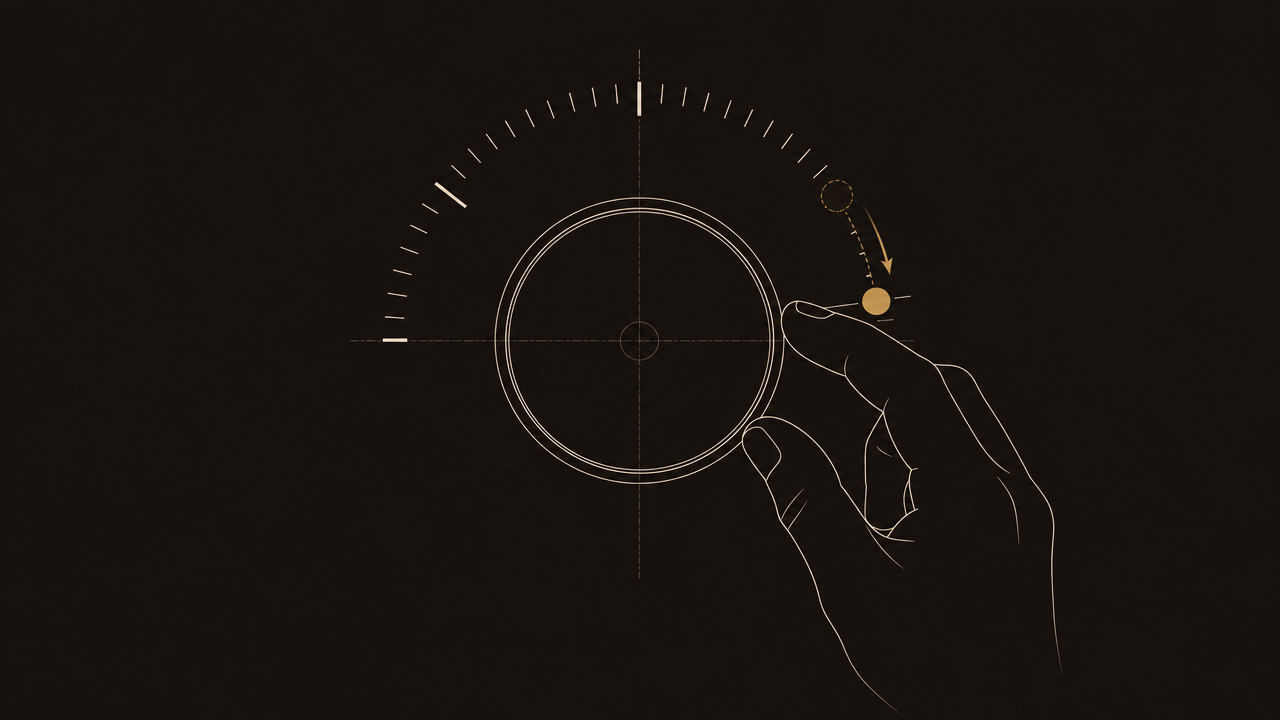
Your body defends a weight, the way a thermostat defends a temperature. When you drop below that setting, it works to bring you back.
It does this in several ways at once. It raises hunger. It sharpens cravings. It slows your metabolism, through a process called metabolic adaptation, becoming more efficient in order to conserve calories. And it stores more of what you eat as fat.
The set-point is not fixed at an ideal number, and it is not fair. It ratchets up when you gain weight and tends to settle at your highest weight, then guards it. It does not ratchet down. That is why each regain can leave you defending a higher number than before.
Picture standing with your back to a wall, tied to it by a rubber band. The wall is your set-point. Losing weight is walking away from the wall, and the band pulls the whole way: the further out you get, the harder it pulls.
This is what happens when a diet ends or a medication stops. The pull is still there, and it draws you back: the hunger and cravings return, and the weight comes with them. You were never fighting a weak character. You were fighting a system built to pull you back, and it does not tire.
So why can this time be different? Not because the medication is a cure.
The GLP-1 medications are a game changer. For the first time, we can quiet that pull with a medication, doing much of what once took surgery, at a fraction of the risk.
The difference that matters here is that surgery's effect lasts, while a medication works only while you take it. Either way, it is a tool, not a cure, and how you use it decides what you get.
Used the way most people use it — take the medication, feel less hungry, eat less, lose weight — it is just another diet. Nothing about your set-point or your habits has changed, so when the medication stops, the pull returns and the weight comes back with it.
Used differently, it offers something no diet could. By quieting hunger and cravings, the medication gives you a stretch of time when the pull is weak — long enough to build new habits without fighting for every one. That window is the opportunity, and using it is the whole point.
Keeping weight off is harder for you than for someone whose body already sits at that weight. To stay below your set-point, you need better habits, and steadier ones, than the person beside you who weighs the same and got there naturally — they can get away with more than you can.
That is not fair, but it is real. A raised set-point is best seen as a chronic condition, one you manage for life, with lifestyle and, when you need it, medication. Managed that way, it is very manageable.
— Dr. David Oliak, board-certified physician and surgeon
We treat the medication as a tool for change, not a way to eat less. While it is quieting the pull, we build what will keep the weight off after it is gone.
That means protecting your muscle — with enough protein, resistance training, and a steady rate of loss rather than a crash. That is because muscle supports the metabolism you are trying to keep.
And it means everyday eating you can live with: more protein and vegetables, far less sugar and processed carbohydrate, a controlled number of calories, and planned meals and snacks.
We start these in the first week, not after the weight is off, so they are already yours when you come off the medication. The goal is a permanent change that lets you live below your set-point, not a lifetime on medication.
The set-point does not stop pulling, so we manage your weight the way any chronic condition is managed: over time, and with a plan for the hard moments.
When you get off track — a vacation, the holidays, a stressful stretch — the key is to act before it snowballs. Left alone, a small regain tends to pick up speed and pull; caught early, a short course of medication brings hunger and cravings back under control before a few pounds become many.
The endless up and down is what happens without a plan for staying below your set-point, rather than something inevitable. With one, it ends.
Anyone can write a prescription, and plenty of places will sell you one and send you off. But the medication is the easy part now.
What decides whether you are still at your weight in five years is how you lose it and what you build while you lose it. It is also having someone who understands this biology with you when the pull comes back. That is our work.
We are not here to help you lose weight one more time. We are here to make it the last time.
— Dr. David Oliak, board-certified physician and surgeon
Let's begin
If you are tired of losing weight and watching it return, that cycle is exactly what our program is built to end. That means losing the weight in a healthy way, building the habits that keep it off, and getting you off the medication for good.
Weight-loss consultations are free, often same-day. To speak with us first, call 714-671-2005.
Weaning off GLP-1 — how to do it right
Maintaining your weight after GLP-1
Why weight-loss plateaus happen
Ozempic vs. Zepbound: which is right for you?